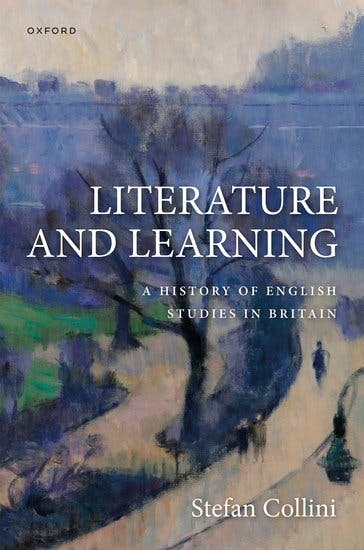

Ronan McDonald’s review of my book in the Sydney Review of Books is the most interesting, thoughtful, and substantial response the book has yet received. McDonald is appreciative and generous throughout, but his review also registers significant reservations about the book, or, at least, about what the book fails to do. I want to try to clarify what the differences between us are and why, for all the insight that McDonald’s review displays, I do not find it altogether persuasive.
Perhaps an initial point about scope may help. The chronological span of my book might, as a rough summary, be said to stretch from 1760 to 1960. The chronological span of McDonald’s main interest and of the greater part of his review might be said, with similar approximation, to stretch from 1920 to the present. And therein lies much of the contrast in emphasis between our two accounts. In terms of the proportion of attention McDonald gives to different parts of my book, he touches only rather lightly on the first half or even two-thirds, while at the same time calling into play developments in the period since the 1960s, which my book does not discuss. This shift in the focus of attention underwrites his complaints about what he finds missing in my account.
McDonald repeatedly emphasises that English offered a form of moral affirmation or exhortation; that it aroused passions that reached beyond the impact of other academic subjects; that it offered a form of cultural criticism and even ethical salvation; and that, those qualities being removed and those hopes dashed, it now has to find a new way to re-create a comparable purchase and vigour. This focus is evident throughout his comments, and becomes especially prominent when he turns to the story in Australia, a story whose significant phase he sees as dating from the work of Leavis-inspired scholars. Needless to say, I recognise those qualities as being features of some of the work undertaken by Leavis and his followers, and I discuss them at the appropriate point in my book. But although that work was important, and perhaps particularly so in Australia in the 1950s and 1960s, it was, even at that time, only one part of the discipline of English studies as then practised, co-existing alongside practices of scholarly editing, work on the history of the language, more traditional forms of literary history, and so on. Moreover, Leavis only comes on the scene late in the story I have to tell – in fact not until the twenty-first chapter of the book. As I try to show in the book’s ‘Bibliographical Essay’, the received account of the history of the discipline has exaggerated the place of work done under that inspiration, making it stand for the totality of the discipline before the arrival of ‘Theory’, when in reality it was one time-bound part.
This contrast between our respective focal periods was also involved in the slight misfiring between our contributions to the symposium on my book held at the Institute of English Studies in London last October. On that occasion, McDonald’s account of successive registers of ‘attention’ effectively began with I.A. Richards and went on to embrace recent literary theory. I certainly understand the significance and appeal of such a story: indeed, such work as exists on the history of Eng Lit largely focuses on just that same sequence, albeit with diverse interpretative imperatives. It is the sequence that yields the most obvious forms of intellectual drama and the most direct relevance to the present. That was why I responded, perhaps slightly unfairly, that McDonald seemed to be mourning the drama of the ‘Theory wars’, not because he was ever an embattled champion of ‘Theory’ (rather not...), but because he wanted something that, so to say, kept the temperature up, kept the sense of moral significance and intellectual drama. I regret that I didn’t make that point very well at the time and risked misrepresenting him, but his review makes me feel I was, however clumsily, reaching for something important about the contrast between our respective emphases.
History is, I think, an inherently cool medium. Not this or that brand of history, but the central constitutive attempt to establish wie es eigentlich gewesen, in the much-mocked, much traduced Rankean phrase. English studies has certainly long had a more-than-academic appeal, and I explore several dimensions of that – indeed, it’s a major emphasis of the book. But I attempt to account for this historically rather than to validate or criticise it. I sense that, for McDonald, this means that my book falls short in not re-capturing the animating power that English possessed in some contexts, something that could sit alongside as well as in tension with the institutional features of the story on which my book concentrates. I don’t think this shows that I am insensitive to these aspects of the subject’s appeal, but it does mean that I am not defining English studies in terms of them or attempting to re-animate them in some vibrant contemporary form.
McDonald’s normal sure-footedness seems to me to desert him when he suggests that what he sees as the wilful positivism of my book manifests the influence of Lewis Namier or Herbert Butterfield in tending to discount the role of ideas in history. Not only have I elsewhere been explicitly critical of those two historians, but I would have thought that nearly all my previous work gives the lie to this charge, given its character as a form of intellectual history, and I would also have thought – just to cite two examples – that my book Absent Minds: Intellectuals in Britain and my exchanges with Francis Mulhern collected as What Is Cultural Criticism? provide more than enough evidence of my serious engagement with ideas, often at quite a high level of abstraction. It’s true I chose not to undertake such work in Literature and Learning: I deliberately set out to concentrate on institutional developments and to provide a great deal of empirical information, not aims that I have pursued at any length before, but even so I don’t think that choice is enough to convict me of any Namierite positivism or hostility to the role of ideas.
What I find a little elusive in McDonald’s review is the specification of what exactly the book, conceived in these terms, fails to do that it ought to have done. Perhaps the fairest way to investigate this question is to quote several passages from McDonald that seem to be carrying some kind of reproach or complaint. Here are four representative passages:
1. Having discussed the early history of English studies in Australia, he adds: ‘But it also suggests that, once English travels beyond its metropolitan origins, the distinction between institutional explanation and political critique becomes harder to maintain. What appears as admirable restraint within the British archive can look, from elsewhere, like a method insufficiently attuned to the costs of its subject’s coherence.’ Here what the book seems to fail to do is to provide ‘political critique’ or to be attuned ‘to the costs of its subject’s coherence’. At one level, the book surely brings out the ‘incoherence’ of the discipline – it is a central theme of the book – but perhaps not in the way McDonald is asking for: not, that is, as a story of messy pluralism and co-existence, but maybe rather the more sinister way that certain ideas or groups were tacitly excluded?
2. That reading of his criticism certainly seems to be given added plausibility by this passage: ‘But historical recovery leaves little room for structural critique. Literature and Learning is more comfortable enlarging the cast than asking how the stage was built: which forms of authority were quietly naturalised as “English”, and which alternatives were excluded not by accident but by design – by selection, credentialing, and the social composition of those permitted to speak in the discipline’s name.’ Actually, the book says quite a lot about ‘credentialing’, ‘social composition’, and so on, but I guess in McDonald’s view it does not sufficiently harness its findings to a larger ‘structural critique’, one that would highlight who or what was ‘excluded’, and how this was always likely to bring the old house of English studies tumbling down. I agree that the book does not do that.
3. This third passage illustrates a somewhat different complaint: ‘Students flocked to it [the study of English] because it promised intensity and seriousness: a form of attention that felt, to its adherents, life-shaping. Collini registers this outcome, but rarely recreates the conditions of its appeal. The classroom with the brilliant, intimidating, or intoxicating teacher – a scene that looms large in disciplinary and cultural memory – remains largely offstage.’ It’s a fair point that there is not a lot of first-hand testimony in the book from students (it’s actually a form of evidence that is quite hard to come by for earlier periods), but it’s not right to say that response in the classroom ‘remains largely offstage’. To take just two examples, I quote the testimony of Nan Shepherd about being mesmerised by H.J.A. Grierson’s lectures, and I discuss how Judith Grossman’s (autobiographical) novel Her Own Terms ‘recreates the existential and emancipatory charge that could be associated with “doing English” in that period’.
4. The fourth passage points to something different again: ‘While it is true that tensions – between moral seriousness and institutional routinisation, between cultural authority and pedagogic standardisation, between intellectual charisma and professional normalisation – are visible throughout the book, they are rarely allowed to harden under anything like sustained analytic pressure, let alone surface as outright contradiction.’ This passage is perhaps the most revealing about the difference between what the book does and what McDonald would have liked it to do. Those tensions are indeed visible throughout out the book, and I firmly believe that it can be an effective authorial strategy to let such matters accumulate and rise to the surface of the narrative without forcing them to ‘harden’ into an outright contradiction or even indictment. Of course, I can well see that one could put pressure on any of these tensions and use the hardened contrast to throw light on what later ‘went wrong’ with the discipline or has come to haunt it in the present. One could – if one had set out to write a different kind of book.
In closing, McDonald, noting the book’s aspiration to be a usable resource for the future, writes that ‘The cost of that desire for endurance is a certain coolness, a refusal of immediacy.’ I think he’s right that the book is indeed marked by ‘a certain coolness, a refusal of immediacy’, but I don’t see why in a work of history these qualities should be regarded as ‘costs’. As with the other passages from McDonald’s review that I’ve quoted, he is regretting that I don’t sufficiently attend to qualitative distinctions, to the sense that some ideas mattered more than others because they afforded more compelling accounts of value and meaning, and I suspect he feels the book would speak to the present moment better if I had attended to such matters, since something of that kind is needed now. McDonald makes that point well, and it may have been a failing in my declared intention that it did not allow enough room for analysis of that kind. Perhaps in partial self-defence I might say that, outside of this book, I am sympathetic to the kind of critique that identifies such issues and the tensions involved, as I am to the need to make the case for English and other humanities disciplines in the present (and I would say I have made considerable published attempts to undertake such tasks). But it can only be regarded as a failing in a work of history that it does not do these things if we begin with the premise that that is what all writing about English studies must now do. I do not share that premise. It seems to me that McDonald has given a wonderfully responsive account of the character of my book (though I should just register that Absent Minds was published in 2006 not, as he states, in 1991, and that even I am not quite ‘eighty’ yet!), while also insisting that there is a pressing task that it neglects. I agree with him about the importance of the task, but not about the claim that it is a failing of my book not to have undertaken it.
Stefan Collini, 27th March 2026
Discipline and Deflate
Ronan McDonald on the history of English studies
Few scholars have observed universities as closely as Stefan Collini. Yet, for Ronan McDonald, Collini’s scrupulous history of English studies skirts the systemic tensions and charismatic appeal of a discipline whose future hangs in the balance.
For much of the twentieth century, English as an academic discipline exerted an authority that reached far beyond the university, shaping school curricula, teacher training, and a widely shared sense of what counted as an educated, fully formed person. Today, that authority is said to be in retreat. Enrolments are declining, departments are being merged or closed, and scarcely a week passes without another account of the ‘death of the English major’. The causes proposed are familiar: smartphones, dopamine-addled adolescents, cultural fragmentation, philistine policy makers, the erosion of literary prestige. Stefan Collini’s Literature and Learning does not set out to adjudicate these claims and, indeed, has nothing at all to say directly about the current crisis, since his history stops decades earlier. It offers something at once more modest and more ambitious: the most exhaustive account yet of how English acquired the authority it once possessed, and how that authority was made durable through institutions, practices, and habits of judgement.
In countries such as Australia, that authority was largely inherited and imported: embedded in syllabi and classroom cultures whose lineage often led back to the British universities that are Collini’s subject in this formidable tome. Here, the cultural capital of English was rarely fought over in public, at least until recent decades. It arrived in compressed form, as an administrative inheritance, rather than as an ongoing argument about what the discipline should be. Collini’s British story helps explain why the cultural charisma of English – the sense of literature as moral equipment, and the teacher as a figure of initiation – proved so exportable, even when its intellectual rationales were not continually rehearsed.
Yet for all its potential significance to this cultural history, and shared pedagogical formation, Literature and Learning does not court popularity. It is, by design, a book that refuses many of the pacy narrative pleasures readers of history, even disciplinary history, might come to expect. Collini announces his intentions early, warning that what follows will be ‘information-heavy’ and thick with institutional detail rather than animated by ‘eye-catching methodological innovations’. The result is a history of English studies in Britain that is astonishing in its empirical reach and archival diligence, tracing the evolution of syllabi, examinations, appointments, professional norms, and university structures across a century. If it were any more attentive to calendars, committee minutes, and curricular compromises, the book would need its own registrar’s office.
At the same time, Literature and Learning does tell a story, albeit one carefully stripped of drama and rhetorical crescendo. It traces the emergence of English as an academic subject from its nineteenth-century origins through to its consolidation in the middle decades of the twentieth century, as well as the shifting value systems that made literature an object of study, a vehicle of moral seriousness, and eventually a professional discipline. In its early institutional phases, English draws prestige from texts already freighted with cultural seriousness and pedagogic legitimacy: Shakespeare, Chaucer, and Milton dominate, valued not as objects of specialised theory but as repositories of moral gravity, historical depth, and stylistic difficulty. Other figures circulate as resources for thinking about taste, conduct, and prose style, but the discipline’s early coherence rests on a relatively narrow canon that could be taught, examined, and publicly defended.
Over time, the justificatory languages surrounding English expand rather than turn. Claims about moral seriousness and cultural inheritance are supplemented by pedagogic arguments about training aesthetic judgement, and later still by professional norms governing assessment, research, and appointment. The novel, despite its long cultural prominence, only becomes fully central to English as a disciplinary object in the middle decades of the twentieth century, most conspicuously through F. R. and Q. D. Leavis, whose work sought to make literary seriousness pedagogically concrete by grounding moral authority in reading practices, cultural discrimination, and the training of judgment. Even here, Collini shows, this is less a rupture than a reweighting: older forms of authority are absorbed and repurposed rather than displaced. English survives not by resolving these different claims into one internally consistent theory, but by layering them. What Collini’s long historical reconstruction reveals is not a discipline grounded in a single, stable rationale, but one sustained by a succession of overlapping value systems, packed just tightly enough to remain institutionally reproducible.
Literature and Learning is animated by a resolute anti-mythic impulse, directed as much against the discipline’s self-flattering legends as against the polemical shorthand of its historians. Collini is explicit about his dissatisfaction with accounts of the rise of English that compress a complex, uneven history into a tidy ideological narrative. In the substantial survey of work done on the history of English that concludes the book as a bibliographical appendix, he exposes how often rhetorical confidence has stood in for evidentiary weight. No work fares worse in this regard than Terry Eagleton’s account of English’s emergence in the blockbuster primer Literary Theory: An Introduction (1983), with its thumbnail opening chapter on the ‘Rise of English’. By reconstructing the archival record in detail, Collini has shown beyond doubt how little historical strain such polemics can bear, how pat moral lessons about English as an instrument of social control rely on selective evidence, telescoped chronology, and a flattening of institutional diversity. Against ideological compression, he sets accumulation.
This commitment to accumulation is the book’s governing ethos. Where earlier histories pivot on commanding figures and big ideas – on Matthew Arnold as moral legislator, I.A. Richards as pedagogical engineer, F. R. Leavis as cultural sentinel – Collini insists on the slow accretion of practices: examinations, appointments, professional norms, administrative compromise. His refusal to let ideas outrun institutions reflects not a lack of interest in intellectual life, but a principled suspicion of retrospective inflation. Claims must be earned; enthusiasms moderated; explanation grounded in evidence rather than affect. The result is a history exemplary in its fairness and sobriety, a model of how to write disciplinary history with evidentiary patience. This sobriety, however, is not without its costs.
Collini’s empiricism is best understood not as methodological neutrality but as a particular kind of British historicism, shaped by a long-standing suspicion of theoretical overreach and retrospective abstraction. Literature and Learning stands in a lineage that runs back through the mid-twentieth-century reaction against grand explanatory history, associated with figures such as Herbert Butterfield and Lewis Namier, for whom moralising narratives, teleology, and ideological compression were the cardinal sins of historical writing. Like them, Collini privileges reconstruction over interpretation and explanation over diagnosis. Institutions must first be rendered intelligible on their own terms, in all their contingency, compromise, and administrative texture, before larger claims can responsibly be made.
At the same time, Collini’s method is distinct from the later Cambridge school of intellectual history associated with Quentin Skinner. Where Skinnerian contextualism seeks to recover the force of arguments in their specific political and linguistic situations, Collini is less interested in speech acts than in institutional uptake. Ideas matter in Literature and Learning not primarily as interventions or arguments, but as elements that become stabilised within educational systems. Like the American scholar John Guillory (more on whom later), Collini treats disciplinary scholarship as a mediating form: not a repudiation of the legitimacy of more critical approaches, but a way of rendering evaluative authority professionally manageable and institutionally reproducible. His historicism is therefore not linguistic or rhetorical but infrastructural. The virtue of this approach is its fairness and durability; its risk is that explanation may come to substitute for interpretation, and description for analysis, leaving systemic tensions acknowledged but rarely pressed.
So Collini’s scrupulousness also marks a threshold. A history that so persuasively reconstructs the cultural and institutional grounds of English’s authority inevitably invites a further question: how, alongside an account of how English worked, might one also address how it was lived and experienced? Collini shows with great precision how literary value was rendered credible and transmitted; he is less inclined to help his readers imagine themselves into the forms of intellectual attachment and emotional investment that accompanied that process.
Lionel Trilling’s defence of literary study as fostering ‘an improvement in the intelligence, and especially the intelligence as it touches the moral life’ might easily invite either reverent endorsement or ideological demolition. Collini does neither. He acknowledges the appeal and dignity of the claim, but situates it as justificatory rhetoric rather than as a causal explanation of the discipline’s institutional success. Such formulations mattered less because they drove the expansion of English than because they supplied a language through which its authority could be publicly affirmed. The effect is gently deflationary. Moral seriousness is respected, but trimmed of excess and returned to scale. Something similar is at work when Collini cites L. C. Knights’s 1962 description of English as nourishing students’ ‘sense of life’s interest and significance’, approving it as ‘no bad description’ while quietly commending its freedom from ‘implausibly grand terms’. Enthusiasm is not rebuked, but it is discreetly ushered inside and quietened down. One is reminded of the legendary one-word response of the eminent Cambridge don to a book greeted with rapture in American journals: ‘Suggestive.’
This recoil from rhetorical excess is not merely a matter of tone. It reflects a deeper reluctance to allow affect, nostalgia, or retrospective elevation to do explanatory work. Collini is consistently suspicious of ‘golden-ageism’: the temptation to read the past through elegy or loss, or to allow admiration to harden into historical causation. Once enthusiasm is subjected to this discipline, intellectuals inevitably recede from explanatory centre stage, and institutions step forward to take their place.
For much of his career, Collini has been the critic who most persuasively dismantled the stereotype of English culture as anti-intellectual. Absent Minds: Intellectuals in Britain (1991) remains a salutary reminder of the density, seriousness, and argumentative ambition of English intellectual life, a book that thickened what had too often been caricatured as thin. Literature and Learning, by contrast, deliberately re-situates intellectual figures within a mesh of institutional arrangements. Arnold, Richards, Leavis, and their peers are not erased, but they are denied explanatory sovereignty: treated less as drivers of disciplinary change than as actors whose authority was enabled, constrained, and stabilised by systems already in motion. This is not so much a failure to recognise the importance of these figures’ work, but rather a principled reorientation to a post-heroic history of English in which ideas matter less as expressions of personality than as elements within robust institutional forms.
If, in one sense, this new book might also be called Absent Minds, Literature and Learning does not dispense with intellectual figures altogether. Part III of the book, devoted to ‘Founding Figures’, brings into focus a different cast of characters, including A. C. Bradley, John Bailey, Arthur Quiller-Couch, George Saintsbury, and others whose authority lay less in programmatic theory than in the exemplary nature of their teaching, criticism, and cultural mediation. These are not originators of systems but figures whose influence was exercised through lecture halls, classrooms, and reviewing columns rather than through manifestos or methodological rupture. Their prominence in Collini’s account reinforces, rather than unsettles, the book’s larger argument. What is foregrounded is not intellectual charisma as such, but intellectual fit: the capacity of certain kinds of minds and styles to operate effectively within emerging institutional forms. A similar logic governs Collini’s treatment of what might otherwise appear as marginal byroads in the discipline’s history. His chapters on women’s colleges and less celebrated institutional sites are careful acts of historical recovery, attentive to exclusion and uneven access without converting those histories into critiques of the system as a whole.
The Australian case sharpens this tension. Collini gestures briefly, in his bibliographical appendix, to work on the development of English beyond Britain, acknowledging Leigh Dale’s The English Men: Professing Literature in English in Australian Universities (1997). These passing references hint at a larger story that Literature and Learning does not pursue, but which throws its method into relief. English in Australia was not simply inherited; it was actively installed, often by figures trained in British universities and formed by Leavisite habits of judgement and the evaluative assumptions of mid-century English criticism. Critics such as Vincent Buckley and Brian Elliott, both Cambridge-educated, played central roles in shaping not only the teaching of English but the very idea of an Australian literary canon. What they brought with them was a portable apparatus of seriousness, a way of reading, valuing, and adjudicating literature, that functioned with impressive authority inside universities, yet which would later appear structurally lopsided – and, in their effects if not their intentions, tacitly exclusionary – when applied to the invention of a national literature in a settler-colonial context. The effort to endow Australian writing with moral weight and historical depth was, therefore, also an effort to reconcile imported evaluative norms with a cultural history marked by rupture, belatedness, and the exclusion of Indigenous voices. In this sense, Australia exposes a tension largely latent in Collini’s account: English proved remarkably adept at reproducing itself institutionally, but far less equipped to reckon with histories that its own evaluative frameworks could not readily absorb.
None of this negates what Collini helps us to see. On the contrary, the Australian case confirms the power of his analysis of disciplinary custodianship and evaluative transmission. But it also suggests that, once English travels beyond its metropolitan origins, the distinction between institutional explanation and political critique becomes harder to maintain. What appears as admirable restraint within the British archive can look, from elsewhere, like a method insufficiently attuned to the costs of its subject’s coherence.
A kind of archival generosity, attentive to forgotten figures and marginal sites without forcing them into a polemical frame, is characteristic of Collini’s approach throughout. But historical recovery leaves little room for structural critique. Literature and Learning is more comfortable enlarging the cast than asking how the stage was built: which forms of authority were quietly naturalised as ‘English’, and which alternatives were excluded not by accident but by design – by selection, credentialing, and the social composition of those permitted to speak in the discipline’s name.
As well as its political occlusions, a history that privileges scholarly steadiness and exhaustive empirical detail may also entail a sort of unweaving of the rainbow: the cultural authority of English is patiently explained, even as the enchantment it once exercised is quietly thinned in the telling. English, we must remember, did not become merely an efficient academic formation. It attracted for a time a numinous aura, one marked not only by intellectual and cultural attachment but by a quasi-religious sense that it offered pathways to existential meaning. Students flocked to it because it promised intensity and seriousness: a form of attention that felt, to its adherents, life-shaping. Collini registers this outcome, but rarely recreates the conditions of its appeal. The classroom with the brilliant, intimidating, or intoxicating teacher – a scene that looms large in disciplinary and cultural memory – remains largely offstage. One is left wondering whether a history that so impressively explains the institutional production of English can finally dispense with an account of how that production was experienced, felt, and desired.
The late chapter titled ‘Scenes from Departmental Life’ signals both what the book will and will not provide. Those hoping for the sorts of ‘scenes’ we might get in a campus novel, like John Williams’ Stoner (1965) or David Lodge’s Changing Places (1975), will search in vain. Collini’s ‘scenes’ come from professional reports and reflective essays in an early-1960s journal: staid procedural documents, revealing in their very dryness. What emerges is a discipline talking to itself in a register of careful qualification, anxious responsibility, and procedural seriousness – a style of self-description that mirrors the book’s own discipline.
That convergence of tone between archive and historian places Collini’s book within a larger, transatlantic moment of disciplinary self-accounting. Collini himself notes its parallel emergence with Guillory’s Professing Criticism (2022), a major study of literary criticism’s institutional formation in the United States that, as Collini himself observes, arrives at strikingly similar conclusions by different routes. Both books are sceptical of heroic origin stories; both treat literary criticism less as a sequence of intellectual breakthroughs than as a professional practice shaped by institutions, curricula, and systems of credentialing.
Yet where Professing Criticism is more explicitly sociological and treats the discipline’s institutional formation as a site of unresolved tension, Collini’s more archival account is markedly resistant to systemic diagnostics, less interested in contradiction than in coherence. Guillory’s sociology is animated by fault-lines: between criticism and scholarship, elite judgment and mass credentialing, teaching and research, aesthetic authority and bureaucratic reproduction. These tensions are not incidental but constitutive, and Guillory’s argument turns on the claim that they eventually place the discipline under structural strain, while also making visible counterfactual histories of English: paths not taken, failed experiments, or forms of literary study (rhetoric, philology) that proved institutionally unsustainable. For Guillory, the foreclosure of these other possible version of the discipline are central to its story; English is shaped as much by what it could not become as by what it successfully stabilised.
Not so for Collini, whose liberal historicism recovers forgotten participants more readily than it interrogates structural alternatives. In Kuhnian terms, Collini is interested less in paradigmatic rupture than in the conditions of disciplinary ‘normal science’: the routines, norms, and institutional practices through which English reproduced itself as a stable form of knowledge. Politically minded critics (hardly scarce in the discipline of English) are likely to pounce on the blindspots here. While it is true that tensions – between moral seriousness and institutional routinisation, between cultural authority and pedagogic standardisation, between intellectual charisma and professional normalisation – are visible throughout the book, they are rarely allowed to harden under anything like sustained analytic pressure, let alone surface as outright contradiction. This is most evident in the book’s final chapter, tellingly titled ‘Doubts’, which registers uncertainty without quite theorising it. We are shown a discipline that has become self-conscious, administratively dense, and increasingly defensive about its purposes, but the sources of that defensiveness are not fully anatomised. Unlike Guillory, Collini stops short of suggesting that English’s difficulties arise from contradictions internal to its own success. One comes away with a less developed account of how the very mechanisms that secured its authority may also have prepared the conditions for its later vulnerability.
To say this is not to accuse Collini of evasion, still less of bad faith. It is to note a limit intrinsic to the kind of liberal-historical explanation he practices. Literature and Learning is committed to understanding the past on its own terms, and to resisting the temptation to read history backwards from contemporary crises. But in declining to diagnose or speculate, to admit narrative arcs of affective moment, it leaves open the question of whether some histories of institutions require not only reconstruction, but interpretation at the level of systemic tension. The refusal to elegise becomes most explicit at the book’s conclusion. Despite having devoted more than six hundred pages to the history of English, Collini resists any valedictory gesture. ‘This should not be understood as an elegiac reflection,’ he insists; ‘quite to the contrary, it is a piece of historical analysis that may also serve as a kind of wake-up call. “English” cannot bury its head in the sand and assume that society owes it a living.’
The point is bracing, and characteristically unsentimental. Yet if the authority of literature is waning, if the study of English is falling from its position of cultural centrality, Collini’s history seems prepared to register this as a sociological fact rather than to ask what, if anything, we are losing. There is something admirable and also something frustratingly austere or ascetic about all this. Collini’s mature realism guards against illusion, but it also withholds conviction. One finishes the book with a powerful understanding of how English survived – and with far less sense of why, beyond historical interest, its survival might still matter. In declining to mourn, Collini also declines to risk attachment. The result is a history that is exemplary in its intelligence and integrity, yet reticent at the very moment when judgment, not merely explanation, might be required.
This helps to explain the book’s refusal to pursue the discipline into the most recent decades, despite its scale. For Collini, that is simply too big a task and, in any case, not the book he has chosen to write, one which aims at explanation rather than exhortation. Fair enough, but also a shame. In the pages of the London Review of Books and elsewhere, Collini has been among the most influential public defenders of the humanities and liberal education against political and econometric pressure. Yet here he refuses to allow that contemporary struggle to shape his historical narrative, as if determined to keep advocacy and exposition in separate registers.
Literature and Learning wants to be definitive in the old-fashioned sense: not a contribution to a passing debate, but a work sturdy enough to be consulted, returned to, and argued with over time. It bears the marks of a scholar, now eighty years old, writing with the long view firmly in mind, less impressed by intellectual fashion than by the patient accumulation of evidence and the slow testing of claims. The cost of that desire for endurance is a certain coolness, a refusal of immediacy; the gain is a book that resists expiry.
For those who do want to know ‘what is to be done?’, this book can at least offer genealogical clarity. By showing with such precision how English acquired cultural authority, how it trained judgment, disciplined attention, and made evaluative seriousness reproducible, Literature and Learning throws into relief what is now required if that authority is to be sustained or reinvented. The work of explanation has been done. What remains is the work of renewed and active custodianship. Disciplines do not survive only by understanding their past, but by deciding what in that past remains worth preserving. English did not only hold a unique and venerated place in the university because it was institutionally well designed. It mattered because it promised a form of aesthetic education: a way of cultivating judgment, attentiveness, and discrimination through sustained engagement with demanding works. Digital media and an age of distraction do not make those capacities obsolete. They place them under unprecedented strain, and in doing so supply English with a renewed raison d’être.
In that sense, Literature and Learning arrives at an inopportune, but also a revealing moment. At a time when cultural authority is increasingly mediated by digital platforms, when our attention is reorganised by new technical and institutional protocols, and when evaluation is increasingly automated or metricised, Collini’s history reminds us of what English once knew how to do. The question his book leaves us with is whether the discipline still has the nerve to act as a custodian of value: to defend canons not as closed inheritances, but as instruments of judgment and transmission, and to insist that aesthetic education remain a public good rather than a private taste. In a culture saturated with content and choice, such custodianship insists that access to our diverse literary pasts – earned, demanding, and contested – remains not an elite privilege, but a civic resource. However, much more than the social prestige of its objects (which may be diminishing in any case), the point of English lies in its capacity to cultivate discrimination: the ability to tell richer forms of expression from thinner ones, more sustaining cultural achievements from more disposable ones, through trained attention and informed judgment. New technologies in post-print cultures do not abolish that task; they intensify it, multiplying both access and noise, and thereby making the work of discernment more, not less, necessary. Under these conditions, aesthetic education is not a retreat into cultural hierarchy, but a significant surviving form of resistance to the large-scale commercial capture of our inner lives.