
How could reading a letter harm you?
— Ovid
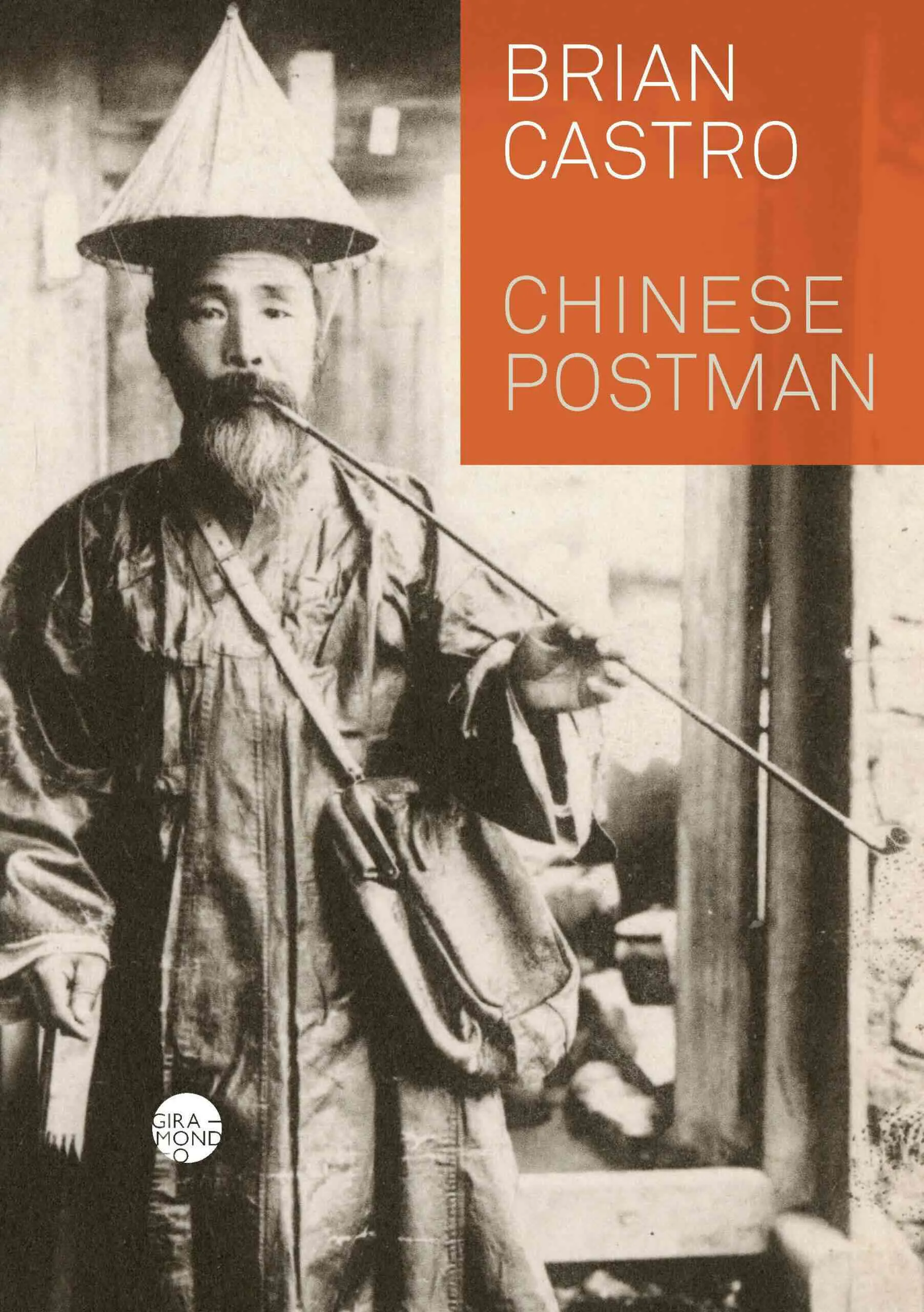
Amelia Zhou on Brian Castro’s ‘limbo of letters’
Through letter writing Brian Castro developed a taste for the artifice that has come to define his fiction. Reviewing his most recent novel, Amelia Zhou uncovers the modernist precedents for and digital pressures on Castro's epistolary romance.
How could reading a letter harm you?
— Ovid
‘Writing letters is the only thing I can do now’, declares Abe Quin, the seventy-three-year-old ‘self-fashioned fireside epistolarian’ in Brian Castro’s twelfth novel, Chinese Postman. But only certain kinds of letters are welcome in Quin’s world. Email is for scammers. Text messages are tolerated. He refuses to broadcast himself on social networks. The letters he likes – full of gossip, secrets, sentiment – are the intimate, conspiratorial kind, intended for ‘a single recipient’. It would seem preferable that they be analogue, too: handwritten, enveloped, received in the mailbox, not the inbox. Of the many epistolary subgenres, Quin is most fond of the love letter (who isn’t?). As a teenager, he sent plagiarised extracts of Catullus to a crush; now as an ‘old, somewhat embittered letter-writer’, he starts a back-and-forth with Iryna Zarebina, a forty-year-old woman sheltering with her daughter in war-torn Ukraine – over email and text. Quin is also an expert in delivering letters. As the titular Chinese postman, he is out on the job transporting post day and night, walking and cycling the Adelaide Hills, making up the route as he goes along.
Castro himself is also a seasoned epistolarian. By his telling, he was born in 1950 on a ferry between Hong Kong and Macau to an English-Chinese mother and a Portuguese father. Castro spent his early years in Hong Kong, speaking English, Cantonese, and Portuguese. At the age of eleven, he was sent to boarding school in ‘semi-rural’ Australia, where he has remained since. In his isolated boyhood, ‘what kept me going’, Castro recalls, ‘was the art of writing letters’. He began his ‘textual rebellion’ by writing to ‘Auntie Maria’, who was in fact his childhood sweetheart. These formative experiences of evading surveillance helped Castro become a writer: ‘I had to be a spy; a liar; an inventor.’ His first job in Australia was also as a postman. In his mid-twenties, Castro went to Paris, then the edgy epicentre of poststructuralist theory, to work as a language assistant, returning often in later years to visit the city. In 1980, invigorated by his continental education, Castro began writing in earnest – his first novel Birds of Passage appeared three years later – sustained, as he put it in his 2019 Meanjin essay, by the ‘subconscious essayistic intent to fragment the master-narratives of English literary colonisation’. In Chinese Postman, his epistolary romance with Iryna becomes a conduit for essayistic reflections on, among other topics, ‘war again’, a subject that ‘never left him’.
Spying, lying, inventing – fiction’s crimes of artifice – have long been part of Castro’s toolkit, but Chinese Postman seems, at first, ready to dispense with them. Novel writing, Quin tells us at the start of Chinese Postman, is ‘grave-robbing; scene-stealing; masking; causing grief; mischief making’. Quin, reader-detectives will quickly realise, sounds a lot like Castro. Like his author, Quin is in his seventies, an ‘esteemed author of thirteen books’, a retired professor, a migrant, and like many of the characters who inhabit Castro’s novels, a nostalgic melancholic to boot. Typical of this last type, Quin is a ‘fragmentist’ and a ‘collector’. And, encyclopedically, Quin collects everything: ‘coins, stamps, minor experiences’; ‘bric-à-brac […] trinkets, and pretty girl students’; ‘depression, obsessions and repressions’; books (especially German literature); Vietnam War assault rifles; and so on. Chinese Postman is a carrier bag that holds the gargantuan volume of experiences, memories, and objects Quin has accumulated over his life.
But, in his twilight years, Quin is now more interested in collecting’s opposite. If everything goes inside the collector’s bag, doesn’t everything approach its own taxonomic insignificance? If what collecting boils down to is mere accretion, Castro is intent on wanting us to notice how such wanton preservation necessitates destruction, so populated is the novel with references to waste, fire, and death. Unlike the eager, disorienting travels of archival discovery in Castro’s Shanghai Dancing (2003), for instance, Quin is tragicomically morose, reclusive, self-pitying, burdened by life. Why ‘crank up the life engine’, when, as Quin moans, ‘I’m tired of production, of striving for the big work’? Death is knocking, the novel says, which means there’s no better time to throw things out.
Chinese Postman carries Quin’s desire to destroy the big work – including the one in which he features as protagonist – into the novel’s project of ‘cleaning the excrement from what remains of his life to recover news of a new world’. Looking back at his life allows him to confront other abounding questions related to the end – an end that feels more like a perpetuating ‘history of shit’. Chinese Postman is itself an attempt to narrate a ‘history of shit’; its frequently scatological language, besides plainly describing Quin’s eccentric fixations with death (and toilets), tries to connect his personal predicaments with the ‘celebrities, party-officials, and demagogues at the top of the heap of dung, thriving on undying death’. A nineteenth-century Charles Marville photograph of a Parisian pissoir, the only photograph reproduced in the novel, is one way Castro tells us how paramount waste is to the project. During WWII, street urinals in Paris doubled as places for the French Resistance to meet for private conversations, away from Nazi surveillance. Now, Marville’s pissoir is demolished, and such amenities are no longer features of Parisian public life, let alone places of clandestine information exchange. In rendezvousing with Iryna over email rather than the pissoir, Quin finds his own node of connection to history’s messy pungencies.
Given the autobiographical parallels between Quin and Castro, we might be tempted to ask whether Chinese Postman is also an excavation of the author and his own ‘history of shit’ – an author, who in the late period of his literary career, is now attempting a kind of self-autopsy. Chinese Postman remains one step ahead of the reader in its ficto-critical (self-)reflections, sometimes with doleful resentment. ‘His late style had turned into cold collations of Eros and Thanatos’, laments Quin, whom we might also call Chinese Postman’s in-house literary critic. As the outhouse critic, I dispute the adjective ‘cold’; the novel is ironic and funny, mordantly so. ‘You need the irony’, as W.G. Sebald says, ‘to keep your readers by your side because unmitigated melancholy is not consumable.’
Nevertheless, melancholy is the dominant mood of Chinese Postman. And it’s difficult not to parse it as an expression in part of Castro’s own authorial anxieties. Quin morbidly decries the fact that ‘memory is all I have left, but this kind of memory may be a form of dementia’; that he has ‘lived most of his life backwards, without discovering happiness’. Castro, although firmly in his late period now, has been perennially untimely, out-of-joint with his historical moment. Over more than four decades of writing, he has aligned himself, proudly and deliberately, with a European vein of modernist, nostalgic-melancholic writers. Franz Kafka’s love-struck epistolary agonies and the ghost of the monkish Peter Kien in Elias Canetti’s Auto-da-Fé, for instance, hover over the novel.
But in an Australia where the ‘old made way for the young [guaranteeing] a juvenile legacy’, there lingers another latent anxiety about a different kind of out-of-jointedness: Castro’s own shaky literary canonical standing between those same pillars labelled the ‘old’ and the ‘young’. Where does Castro’s legacy fall? He would rather opt out of answering that question about his place in a national canon, judging by his ambivalent description of Australia – ‘home and not home’ – as a figurative ‘writing country’ founded on principles of exile, protest, and subversion. It is a position that, above all, signals Castro’s rejection of ‘the linear inheritance of national feeling, particularly of land and landscape; blood and soil; propriety and tradition’. Don’t call Castro an Australian novelist, let alone a Great Australian Novelist, but if you must, he’d prefer it to be ‘with a small “a”’. Still, that doesn’t mean there hasn’t been a degree of disappointment on Castro’s part that his many ‘big work[s]’ have not reached the high altars of both critical and commercial success. Chinese Postman was shortlisted for, but didn’t win, the 2025 Miles Franklin Award; few authors in recent decades have been on more shortlists (four since 1992) without winning than Castro. When asked to comment, Castro said, in tones reminiscent of Quin, that he ‘was used to disappointment’ and was ‘just running as an outsider in the mud!’
Castro can, however, count the Prime Minister’s Literary Award and the Patrick White Award as two of the many other accolades under his belt. His self-disparagements might in fact be indicative of the condition shared by many Australian authors, prone to feeling aesthetically inadequate and culturally estranged. Culture happens somewhere out there in the rest of the world, probably Europe, and certainly not in Australia, as ‘cultural cringe’ goes. When Quin mentions the author Helen Demidenko in Chinese Postman, this may well be fictional shorthand for Castro’s concern with his own status as an ‘australian’ author writing Australian literature. ‘The year I left for Paris’, Quin tells us in Chinese Postman, ‘was the year that Helen Demidenko won the Miles Franklin award for literature’. The real-life Castro was a side character in this 1994 literary hoax, in which Demidenko (real name Helen Darville) falsely claimed Ukrainian heritage (she is in fact English) while writing and promoting her award-winning novel The Hand that Signed the Paper. Originally paraded as non-fiction, the novel drew from the fabricated experiences of her putatively Ukrainian, Nazi-collaborator family. Castro, as a former winner of the Vogel Award (which ‘Demidenko’ also won), was asked to edit her manuscript, but passed on it because of its ‘deadening and numbing’ prose.
As one of the literary celebrities on Castro’s personal ‘dung heap’, Darville well illustrates Quin’s critique of Australia’s amnesiac ‘juvenile legacy’. But it also shows the extent to which Australian literary culture is captive to an idea of authenticity with regard to an author’s identity and the stories they tell – and thus especially susceptible to the cult of celebrity, identitarian imposture, and perhaps worst of all, bad writing. Castro is critical of this, while also presenting himself as a literary trickster by consistently playing with the autobiographical veracity of his own novels. But whether Quin really is Castro’s double – and thus whether we could properly call the novel autobiographical, dare I say autofictional – is beside the point given that Castro is keen to test the extent to which the unsteady ground of ‘invention’ overlaps with ‘authenticity’. The book’s situation in the uncanny valley between fiction and fact – where Michelle de Kretser’s Theory & Practice also resides – is one of many ironic winks to the metafictional gambits Castro has typically indulged in. For Castro, it is the novel’s sheer capaciousness that licenses the games of authorial hide-and-seek he has always liked playing with his readers.
Chinese Postman’s interest in authenticity, however, goes beyond questioning the value of identity for literature toward a general skepticism of the possibility of ‘authenticity’ in a contemporary moment widely described as post-truth and post-factual. Consider what Castro says his novel is ‘about’:
Authenticity? There is now only the void and deepfake. And so, what do we do with the unreality of selves, those floating situationist reconstructions of authenticity? My book then, is about the inauthenticity of letter-writing, which is no longer an art, but has now become the ‘authenticity’ of virtual lives, serialised without presence or character. Either believer or scammer, there is no resonance of culture or of literary depth in what I see as current digital correspondence.
Quite the digital cynic, Castro seems to believe that the ‘humane art’ of letter writing – which, as Virginia Woolf said last century, ‘owes its origins to the love of friends’ – is disappearing. The Danish postal service delivered their last letter at the end of 2025, ending a four-hundred-year-old tradition, and Australia Post scrapped daily letter deliveries in 2024. This disappearance of letters, made more urgent by our default digital lives, has only intensified their aura of analogue authenticity.
In Chinese Postman, there is certainly no love between Quin and Iryna when they start their email correspondence. ‘Dear Professor’, she writes in her cold email to him, ‘You once wrote about war eloquently, so the critics said. I do not believe anyone can write eloquently about war. If you could find the time, could you please answer that question?’ ‘Iryna’ is suspected of being a ‘bearded scammer’ (initially introduced by Quin with quotation marks) out to steal his secrets and money, not the war refugee she claims to be. His suspicions aren’t misplaced, because she soon asks him to donate money to a Ukrainian dog shelter. Iryna’s introduction clearly invites comparison with the Demidenko affair, while also provoking the technological fears pointed out in Castro’s author statement.
Chinese Postman primarily uses email to consider our often paranoid attachments to digital technology, a somewhat dated, if still necessary, digital medium. Back in 2004, the kind of spam email that Iryna’s is suspected of being was still considered ‘innovative’, at least according to Bill Gates, then the most spammed man in the world, receiving around four million a day. He promised then that we would see the death of spam in two years by introducing – in what seems like a naïve solution now – an electronic postage stamp. While the volume of spam may have decreased in the twenty years since Gates’ comments, online romance scams, where victims are honeypotted into sending money in crises, for instance, or the infamous 419 (‘Nigerian Prince’ scam), which harks back to nineteenth-century ‘Spanish Prisoner’ letter writing cons, still persist. And there is no more perfected distraction for the modern writer than the banal flow of email – that medium that, as Justin Clemens has put it, ‘incarnates the contemporary crush for control over communication’. All the more reason for Quin to distrust Iryna.
Despite getting off on a bad foot, Quin and Iryna continue their correspondence. ‘Do you deepen yourself or do you spread out for others?’ Quin wonders, formulating Chinese Postman’s central ethical question. ‘But why not both?’ I want to dissent. Quin is constantly attempting to balance risk and reward in spreading himself out for others, or rather, largely just ‘Iryna’. Their on-off emails evolve to encompass more personal subjects. She emails him dispatches of war from Ukraine, stories of her years of ‘stress, hardship, poverty and disappointment’, and her anxieties about her husband, Witold, fighting on the eastern front. His own regular dispatches include pithy reflections on writing and occasional photographs of his dogs, his plans to get her family to Australia, his attempts at empathy. Quin is not ignorant of the fact that they live in ‘different kinds of bubbles’. Can Quin’s ‘isolated bubble’ cohere with Iryna’s, half a world away?
Not so easily. But Quin deserves credit for trying, again and again, to step outside himself, to recognise and bridge his differences to others, even as his primary motivation seems to be avoiding the self-fulfilling prophecy of melancholic solipsism. ‘Australian melancholy’, Castro has said, ‘distinguishes itself by erasing the Other […] this inability to mourn others while glamorizing death as a concept.’ Chinese Postman knowingly tests the melancholic’s empathetic limits. You’d think that as their relationship evolves, and as Quin falls in (unrequited) love with Iryna, we’d see the woman behind the emails. Yet she remains steadfastly a virtual personification of a ‘real’ world beyond the parochial ‘unreality’ of Quin’s Australia. Is Quin genuinely empathetic to Iryna’s experiences or is he merely a consumer of her trauma?
Our questioning of the limits of the main character’s empathy is extended to the novel form too. Can the novel sustain itself as a vessel for empathy and ethical relation, while it remains ‘summer reading for bourgeois ladies’? Quin’s answer errs on the affirmative side. For all the self-inspecting reservations about novel writing in Chinese Postman, Quin concedes, with uncharacteristic optimism, ‘I’ve always believed it is the novel that carries all the indirect notes of empathy.’
But Chinese Postman doesn’t completely practice what Quin preaches, nor does it want to. Sure, the ‘plasticity’ of the novel ‘bends to all the obtuse emotions and accommodates them’, but how does this tally with Quin’s more banal observation, in the same paragraph, that ‘Major libraries are throwing out paper books’? His constant revisionary, and deflationary, pivots are characteristic of the novel’s undertone of unresolved ambivalence. It’s unsurprising and fitting, then, that Castro, a self-described ‘writer of contradiction’, should turn to the dialogic form of the letter as a more direct way to work through Quin’s conundrum of balancing his responsibility to others against his natural impulse to retreat. Though, even so, he brings his contrarian logic to bear on the idea of the epistle as a vexed endeavour of connectivity and communication. ‘Love is always a casualty of postage’, Quin ironically declares to Iryna over email. It’s a pessimistic thing to say for someone whose job description is to deliver letters, and who is prone to gambling with words of love.
Why is love postage’s casualty, and why is the concept of postage such a dilemma for Quin? Perennial uncertainties of reciprocation and self-censorship plague his correspondences with Iryna. He ‘[postpones] sending the email’; ‘he regretted saying that immediately after sending the email’; and ‘even though he was hoping for a reply, he didn’t get one’. Likewise, when Quin is on the receiving end, he sometimes won’t bother to reply at all, or admits to ‘not know[ing] how to respond’. The message that we, as the third party to these ‘private’ correspondences get, is that letters are destined for failure, either because of the sender’s or receiver’s sabotage or because failure is intrinsic to the medium of the letter, even to the idea of communication itself. Yet Quin welcomes the risk, and willingly inhabits the affective potential of the letter’s failure. When Iryna writes to Quin that she wants to ‘escape [her] life’ even after her hometown Kharkiv has been liberated, he echoes her sentiment with respect to his own predicament. But while Iryna is seeking to leave behind the material realities of war, Quin escapes into unbound fancy – into the ‘limbo of letters, freed from linear time’. Their bubbles stay isolated, not least because Quin is a willing hostage to epistolary suspension.
In all this, one can detect more than a hint of Kafka – one of Castro’s literary heroes and the name of Quin’s ‘alpha dog’. As he famously wrote to his lover Milena in 1922, ‘written kisses are drunk on their way to the ghosts’, a quote Castro used as the epigraph to his 2015 novel The Garden Book. Kafka thought of letter writing as ‘an intercourse with ghosts and by no means just with the ghost of the addressee but also with one’s own ghost’. Kafka’s ghost is the desired image of the sender and receiver produced by the words enclosed inside the letter, an image that deflects the actuality of who they are. When Quin claims he loves Iryna, it is a love of her ghost and the idea of their exchange, not the woman herself. This spectral predilection goes back to Castro’s earliest novels. In Pomeroy (1990), a journalist pursues the elusive Estrellita who ‘was never literal’; in Double Wolf (1991), the narrator believes that ‘the only satisfactory way of pursuing an amorous relationship was to write letters, to remain unknown, distant, absent’; in Drift (1994), letters ‘were a kind of morphine’. Wryly, we are inclined to forgive Quin because it’s a familiar predicament shared by lone, nostalgic, and romantic writers of his ilk.
Kafka was also a theorist of communication, writing that ‘after the postal system, the ghosts invented the telegraph, the telephone, the wireless’. But now it’s the twenty-first century and there’s ‘TikTok. Face-to-face. Zoom. SMS instead of SOS,’ as Quin says, updating Kafka’s century-old list. Quin, unsurprisingly, would rather much ‘still be on the Titanic’. As it happens, 1912, the year the Titanic sank, was also the year Kafka began his love correspondence with Felice Bauer. Does Quin want to jump back in time one hundred years to vicariously relive Kafka’s ‘madness of so many letters’, which we could also undoubtedly call the madness of love itself, to experience the Titanic’s tragic fate? The reason why Quin opts out of disinformation firepits like X, let alone entertain Chat-GPT, seems more than just a matter of modernist nostalgia. On the Titanic’s slowly decaying wreck, Quin can realise a desire to live in no particular time – or at least transcend time marked by technological progress altogether.
But nostalgia can work prospectively too; as Svetlana Boym reminds us, ‘The nostalgic is always looking for a spiritual addressee’. In Chinese Postman, it is Iryna who most embodies that role, turning Quin’s gaze outward and forward. Quin, as the novel progresses, becomes increasingly dependent on Iryna, melodramatically lamenting that ‘without emails from Iryna I cannot live day to day because I have lost the aim of life, let alone the aim of writing’. The novel’s relentless invocations of shit and death, plus its digital suspicions, only intensify his attachment to her, because she comes to represent their opposites. Their emails trade ‘reality’; they are a source of ‘hope’; her replies ‘[open] up a new existence for [Quin]’. Such are the heights of Quin’s fanciful epistolary projections (‘The thing that keeps me going is Iryna. I share and carry her hurts as well.’) that he sends Iryna and her family money and sponsors their visas to Australia (or is this one last money-grabbing scam?); builds an outhouse to accommodate them; asks Iryna whether she’d be interested in being his writer’s assistant (no response); and fantasises about buying her a car for a South Australian coastal road trip (though he won’t be tagging along). Perhaps Quin’s and Iryna’s isolated bubbles will in fact touch, but only after she is impossibly realised as a person, not a ‘thing’. So long as she remains an ambiguous, ghostly figure, her promise of rejuvenation is out of reach for Quin. Another turn in the novel’s well-worn wheel of pessimism.
It seems telling that Chinese Postman does not close with a tête-à-tête between Quin and his ‘single recipient’, but with Quin waiting for Iryna to land at Adelaide airport, that quintessential contemporary limbo defined – as the emotional traffic of letters is – by ‘the flow of love and absenteeism’. If the arrivals terminal analogises the scene of correspondence, Quin finds little comfort in the mirroring. He is ‘out of place in all this high energy’, surrounded by nonsensical branded air-carrier signage (‘Rex; Corporate Aircraft; Qantas Freight; Pilatus Australia’), the ‘deafening’ engine noise, and people everywhere ‘chatting on their cell phones’. The scene updates Kafka’s dream about modernist communication he recalled to Bauer in a 1913 letter:
I ran toward a bridge or some balustrading, seized two telephone receivers that happened to be lying on the parapet, put them to my ears, and kept asking for nothing but news from ‘Pontus’; but nothing whatever came out of the telephone except a sad, mighty, wordless song and the roar of the sea. Although well aware that it was impossible for human voices to penetrate these sounds, I didn’t give in, and didn’t go away.
The cell phone has long replaced Kafka’s telephone; the airport has long replaced the bridge; the roar of global air-traffic has long replaced the roar of the sea. In his dream, Kafka remained on the bridge, because he remained hopeful for a reply despite being ‘well aware’ of its futility. To refuse despair, and yet to remain at the place where it is most acutely felt, was the message of Kafka’s dream. It is a message that Castro’s Quin – the self-described ‘recidivist’ who would choose the sinking Titanic over the safe passage of a plane; Kafka’s telephone over the smartphone; the letter over the email – is well-equipped to heed.
As it happens, the novel ends before Iryna arrives at the airport. But she was never supposed to arrive – at least not in the time of the novel. ‘When I come, you will have no reason to have to write’, Iryna had emailed Quin earlier. I am an invention of your writing, she is saying to him, preferring, too, to live in the limbo of the letter, which is to say the space of Quin’s imagination. We, the readers, also know on some level that what she is saying to be true, because she is describing the very conceit of writing fiction. It would seem, then, that Quin himself has every reason for her not to arrive, so he can continue his fictional mischief, making his ‘big works’, despite his initial dismissals of these pursuits.
Chinese Postman confirms that Quin’s deepest allegiance is to ‘this open book’. Who Iryna really is – between war refugee, scammer, Quin’s spiritual addressee – doesn’t really matter. Not that the novel even resolves these uncertainties for us. She is whoever Quin wants her to be, both a ‘single recipient’ and an amalgam of virtual identities, evidencing Castro’s dictum that the novel is ‘the most intimate letter […] to an unknown beloved: the “Dear Reader”.’ Chinese Postman is Castro’s intimate letter to us; that much is certainly true. But the novel’s real addressee is itself. Chinese Postman mischievously, even smugly, revels in its metafictional hall of mirrors, practising an expansive theory of what a novel can include in its pages – fragments of autobiography, love letters, essays, history lessons, quotes. Stretching the logic of its form, we can never be sure where the next few pages of Chinese Postman will lead. Quin, at the novel’s end, is incredulously, ‘the scrivener who chose life’, who thinks it is ‘a season for growing now […] not excavating’. Because it’s shit that fertilises life, going by the ‘bunch of roses’ brought from his garden as Iryna’s welcome gift. No sooner does he say all this do we wonder how long his rose-tinted glasses will stay on. If contradiction has the final word in Chinese Postman, ‘a new beginning’ will surely sooner spiral to shit.